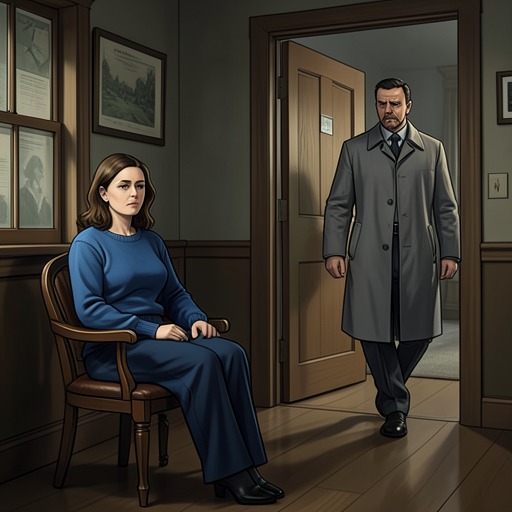
Alcohol addiction
Stolen WanderAlcohol addiction in the novel is not a single crisis but a recurring pattern whose effects pass from Bill O’Neill’s private struggle into his marriage, his daughter Nancy O’Neill’s childhood, and her expectations of family life. Brief periods of sobriety can bring remorse and the possibility of repair, but they do not erase the harm or guarantee that change will last. The story’s clearest measure of recovery is therefore not an apology or a moment of abstinence, but whether Bill can sustain a different life over time.
Pattern and Family History
Bill’s drinking is established as a long-running source of injury within his family. Cheryl remembers meeting him while she was studying literature at college: he arrived at a party in a suit and tie, let her hold his deputy badge, and walked with her under the stars. She recalls that drinking began only after she had fallen for him and he had secured a place in her life. She cannot tell whether he planned to change once she was committed to him or simply assumed he no longer needed to treat her well. The uncertainty leaves the romance of their beginning beside the damage that followed, without making the origin of his addiction a simple explanation for it.
Nancy has grown up with the consequences. When Rex Foster confronts Bill about his treatment of her, he names the shouting, snapping, sneering, and using that shaped her childhood, and attributes that cruelty to Bill’s habit. The addiction thus appears not only in Bill’s drinking but in the household’s emotional climate and in the lasting burden placed on his daughter. Cheryl says she remained patient because she believed Bill loved her more than his addiction; she now recognizes that belief as mistaken. Her account makes the family’s endurance part of the harm: love did not, by itself, make the drinking stop.
Sobriety, Remorse, and Distrust
A temporary sober spell first appears through a practical request. Bill calls Nancy sounding tired and unusually subdued, asks for a ride to a hardware store because a leak has developed in his kitchen, and says that a headache and shaking hands leave him unable to drive. Nancy initially assumes he is too drunk; he explains that he is too sober to drive safely. He apologizes and says he wants to show that he has become a better man. Nancy agrees to help, but refuses to treat the apology as proof. Bill has been sober before, she knows, and those attempts have lasted only a couple of days—long enough to raise her hopes before drinking returns. Her caution is not indifference: she wonders whether this new attempt might give her a reason to remain in Salem, while recognizing how repeatedly hope has risen and collapsed.
Sobriety also exposes Bill to memories and judgments that drinking has helped him avoid. Rex argues that being sober may let Bill see Nancy as a person rather than someone to shout at, sneer at, or use, and understand the scale of the harm his habit has caused. In a later confrontation, Bill is again sober, visibly shaking, and holding a twelve-gauge pump-action shotgun. Rex raises his hands, approaches the barrel, and challenges Bill to consider whether he can shoot a man while sober, when that man is unarmed and Bill is not cornered. The scene makes sobriety an unsettling test of agency as well as a physical state: Bill’s withdrawal does not make him harmless, but Rex presses him to distinguish what he could do from what he will choose to do. Bill’s capacity for violence and his capacity for restraint remain in tension.
Addiction as a Feared Inheritance
The pattern troubles Nancy’s relationship with Rex because she fears that a man who has hurt her might become another version of her father. After Rex abandons her when he learns she is pregnant, she initially connects his withdrawal to the family history she knows. Cheryl urges her to ask whether Rex truly cares for her and whether he is like Bill or a good man. Nancy comes to a distinction that changes how she understands both men: Bill did not leave, but stayed and made the family miserable; Rex’s leaving is a different failure, not evidence that the two men are the same. The contrast does not excuse Rex’s abandonment. It allows Nancy to see the damage she inherited without treating it as an inevitable script for every relationship.
Rex, too, names the fear that addiction can reproduce itself across generations. He tells Nancy he knows he is not his father and does not want to ruin their child’s life or be the reason another fifteen-year-old joins a motorcycle club. His promise is tied to action: he has left the Sons of Wolves Motorcycle Club and accepts banishment from Salem. For him, refusing the life that formed him is part of refusing the future he fears. The novel sets this choice beside Bill’s history, making fatherhood a point at which inherited damage may be repeated or consciously resisted, rather than a fate already settled by the past.
Treatment and the Limits of Reassurance
Bill’s most substantial stated commitment comes when he visits Nancy and Rex and says he has arranged admission to a rehabilitation program. He describes it as the longest available program, lasting one year, with no contact with the outside world during its first three months. He presents the year as time to put his life in order and prove he can become a better man. His apology is accompanied by a breakdown: he weeps over the childhood Nancy endured and says that she did not deserve it. Nancy puts a hand on his back and tells him he can make things right, but privately admits that she does not believe this with confidence. She has never seen him cry this way; his visible pain moves her, yet it cannot undo the history that taught her to doubt him.
Rex kneels to meet Bill’s eyes and argues that a person can find a way back after years of repeated mistakes, but only by choosing to fight for change. Bill responds that he will fight and prove himself through what he does, rather than asking Nancy to rely on his word. The scene places responsibility with Bill even as Nancy and Rex offer support: their encouragement may help him face treatment, but it cannot substitute for his sustained effort. Nancy can want him to recover without claiming that she has forgiven him or that his recovery is assured.
Rex later broadens the idea of addiction beyond Bill, observing that some members of his club entered that life for money, temper, or the desire to feel important, then remained for decades even after wanting to leave. He describes this entrapment as a rut and says that sometimes not fighting is the brave choice. His comparison does not make club life equivalent to alcoholism; it links two different forms of repeated behavior through the difficulty of escaping a life that has become habitual. Against the club’s code of fighting, leaving becomes an act of inward struggle.
Ongoing Recovery and Narrative Significance
The novel gives Bill evidence of progress without presenting it as a completed cure. Near Nancy and Rex’s wedding, he calls from a manager’s phone and speaks clearly, without slurring. He says he has not touched a drink in eleven months and is looking into security work, using the manager’s computer because the other computers are down. He wants Nancy’s approval and hopes to return to work as a better man. His absence from the wedding remains part of the occasion, even as the call lets him offer congratulations and ask—without presuming—that he may visit Nancy, Rex, and their child after leaving treatment. The eleven-month milestone and his attempt to plan for employment mark change; they do not erase his past or guarantee what will follow.
That guarded progress gives addiction its central narrative weight. Bill’s history has taught Nancy to distrust sudden promises, while his later admission to rehabilitation and months without drinking create room for a hope she cannot yet securely believe. Rex’s departure from the club and his determination not to repeat his father’s damage place a second, distinct struggle beside Bill’s. Together, their choices frame recovery not as a dramatic declaration but as repeated responsibility over time: facing harm, accepting help, and building a life that does not pass the same suffering on to the next generation.